
Pediatric Dentist or Orthodontist: A Parent's Complete Guide to Choosing the Right Specialist for Your Child
Many parents feel unsure about whether their child should see a pediatric dentist or an orthodontist first. Understanding the role of each specialist can help parents make better decisions early and avoid more complicated treatment later.
Pediatric Dentist vs Orthodontist: What's the Difference?
A pediatric dentist focuses on the dental health and development of children, from infancy through the teenage years. Their role includes preventive care, cavity treatment, fluoride applications, monitoring oral habits, gum health, and guiding healthy dental development as children grow.
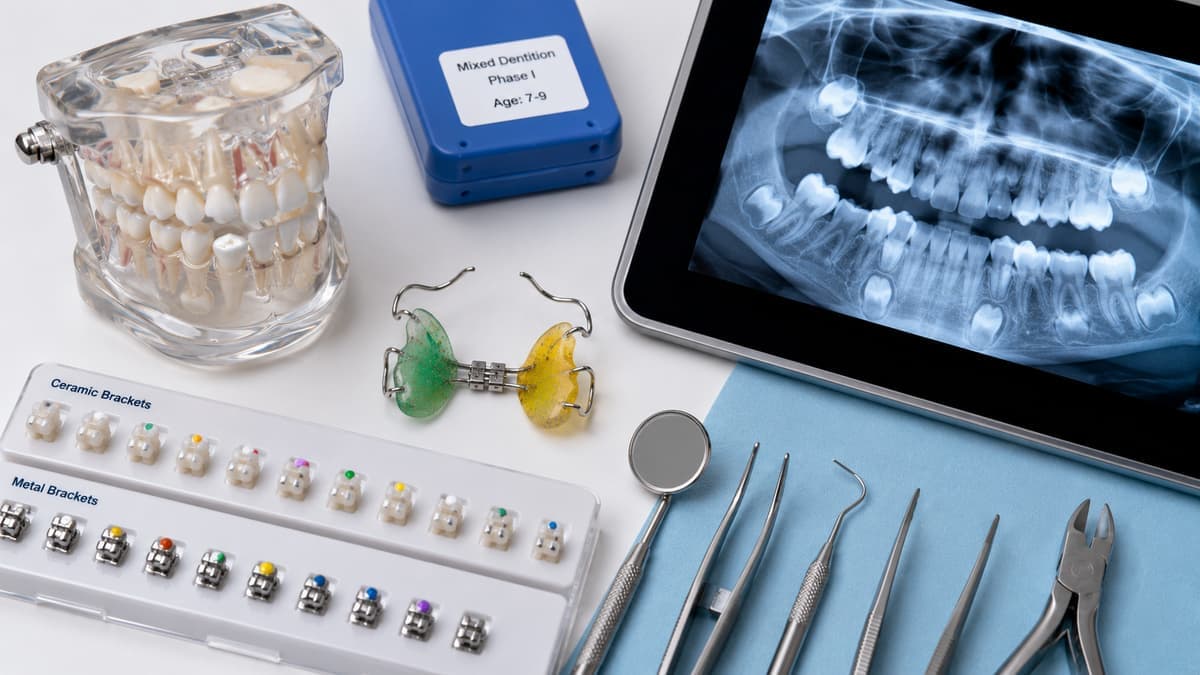
An orthodontist specializes in correcting alignment and bite-related problems. They treat crowded teeth, jaw irregularities, spacing issues, and bite correction using braces, aligners, expanders, and other orthodontic appliances.
Both specialists play an important role in a child's oral health journey, but they address different concerns at different stages of growth.
When Should Your Child Visit Each Specialist?
Ages 1 to 6: Start with a pediatric dentist. Early childhood is the foundation stage for oral health. A pediatric dentist helps with cavity prevention and treatment, oral hygiene education, fluoride treatment, monitoring jaw and tooth development, managing habits like thumb-sucking or mouth breathing, and creating a positive, fear-free dental experience.
Ages 7 to 9: The orthodontic screening phase. Most orthodontic associations recommend that children have their first orthodontic evaluation by age seven, even if no obvious problem is visible. At this age, specialists can identify developing concerns such as crowding, crossbite, jaw growth imbalance, improper bite patterns, and eruption issues with permanent teeth. Early monitoring does not always mean braces are needed immediately. In many cases, timely observation helps avoid more complicated treatment later.
Ages 10 to 14: Active orthodontic treatment. As permanent teeth fully erupt, orthodontic correction often becomes more effective and predictable. This is the stage where braces, aligners, or corrective appliances may be recommended depending on the child's needs.
Signs Your Child May Need Specialist Dental Care
Parents should not wait for severely crooked teeth before seeking advice. Some early warning signs include difficulty chewing or biting, mouth breathing during sleep, speech difficulties, thumb-sucking beyond age five, early or delayed loss of baby teeth, clicking or shifting jaws, and crowded or visibly misaligned teeth.
When identified early, many of these concerns can be corrected with simpler, less invasive treatment options.
The Advantage of an Integrated Dental Team
One of the biggest challenges for parents is visiting multiple clinics and receiving different opinions for the same issue.
Ashirvad Dental Clinic in Subhanpura follows an integrated approach where pediatric dental care and orthodontic planning work together closely. The clinic is led by a husband-wife specialist team, with the husband practicing as a prosthodontist and implant specialist, while the wife focuses on pediatric dentistry and children's dental care.
This coordinated setup allows children to receive continuous guidance as they grow, with treatment planning that remains consistent and well-organized over the years.
What Happens During the First Visit?
A child's first dental appointment should feel calm, friendly, and pressure-free.
At Ashirvad Dental Clinic, the first visit usually begins with a gentle introduction rather than an immediate clinical examination. The focus is on helping the child feel comfortable in the environment before checking teeth, bite development, and oral habits.
Digital X-rays are only advised when necessary and are performed using child-friendly low-radiation protocols. Parents are guided clearly about findings, future risks, and whether treatment, monitoring, or preventive care is recommended.
Why Early Action Matters
One of the most valuable concepts in modern children's dentistry is interceptive orthodontics — identifying and correcting developing problems before they become severe.
For example, a palatal expander used early may reduce the need for tooth extractions later. Habit-correction appliances can prevent future bite problems. Early monitoring can shorten future orthodontic treatment time.
Early evaluation does not always lead to immediate treatment. Often, it simply allows specialists to guide growth at the right time with the least invasive approach possible.
Summer break is often the ideal time for parents to schedule dental evaluations without interrupting school routines. Whether your child needs a routine checkup, preventive care, habit correction, or orthodontic assessment, starting early makes treatment simpler, more comfortable, and more effective in the long run. A healthy smile begins with the right guidance at the right age — and choosing the right specialist can make all the difference.
Related Services at Ashirvad Dental Clinic
Ready to take the next step?
Book a consultation with our specialists at Ashirvad Dental Clinic, Subhanpura.
More Articles
Teeth Grinding (Bruxism): Signs You Are Doing It and How to Stop
Do you wake up with a sore jaw, headaches, or worn-down teeth? You may be grinding your teeth at night without even knowing it. Bruxism affects millions of Indians and can cause serious dental damage if left untreated. Here is how to recognise the signs and protect your teeth.
Full Mouth Rehabilitation: Restoring Your Complete Smile with Dental Implants in Vadodara
Missing multiple teeth or struggling with failing dental work? Full mouth rehabilitation using dental implants can restore your complete smile, chewing ability, and confidence in a single treatment plan. Here is everything you need to know about this life-changing procedure.
Dental Anxiety? How Pain-Free Dentistry Actually Works in 2026
Fear of the dentist prevents millions of Indians from seeking dental care until small problems become serious emergencies. Modern pain-free dentistry has changed dramatically — here is how advanced techniques at specialist clinics make dental visits genuinely comfortable.
Dental Implant Cost in Vadodara 2026: Complete Price Guide and What to Expect
Wondering how much dental implants cost in Vadodara? The price depends on the type of implant, number of teeth, bone condition, and the clinic you choose. Here is a transparent, detailed guide to help you understand implant pricing and make an informed decision.